
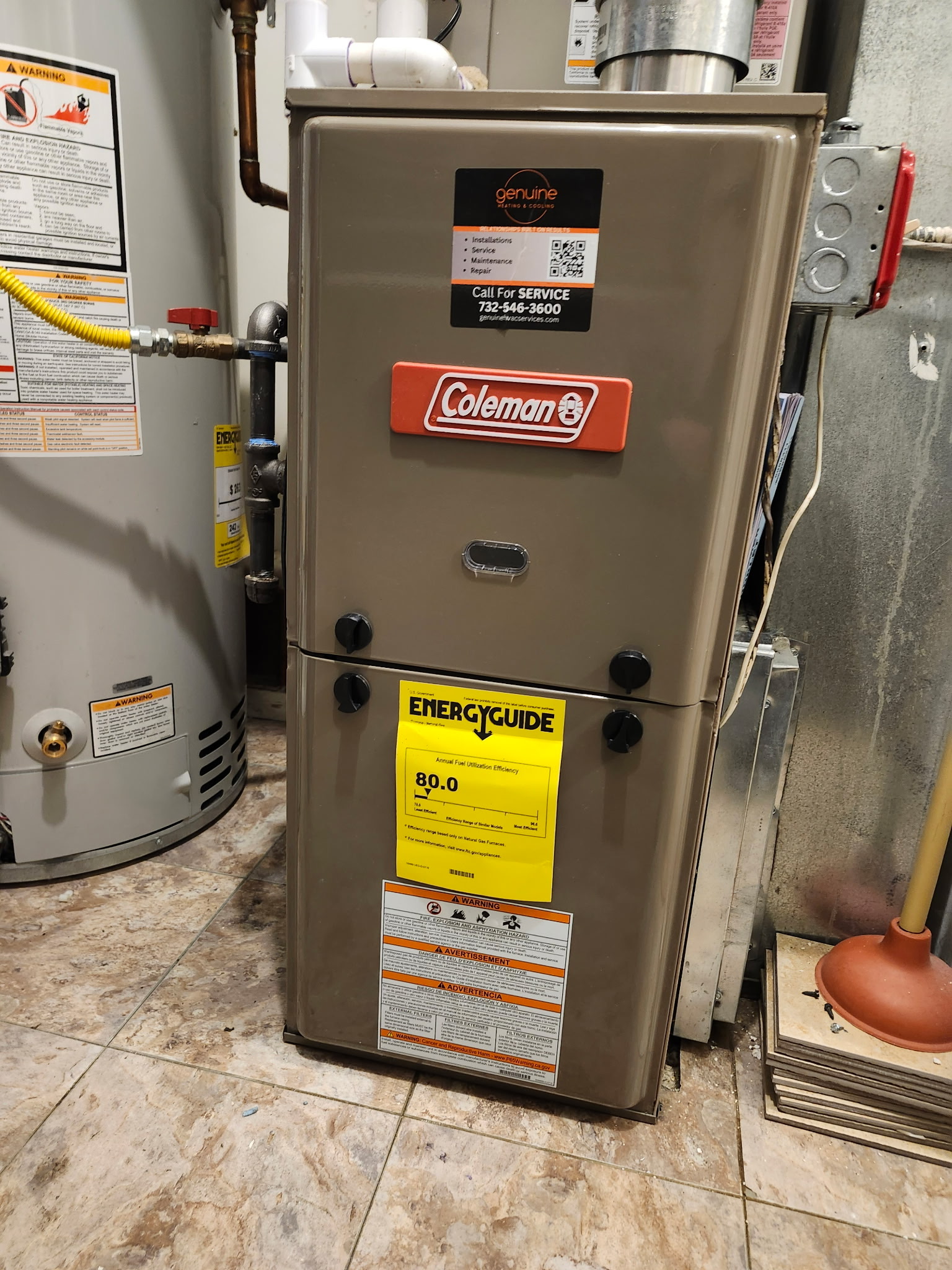
If your furnace won’t turn on when you raise the thermostat in heating mode, don’t panic — there are several common (and fixable) reasons why this might happen. Whether you’re dealing with a newer high-efficiency unit or an older gas furnace, this guide walks you through the most likely causes, from power issues to failed parts, and how to safely address each.
1. No Power to the Furnace
Fix:
- Check your circuit breaker — reset if it’s tripped.
- Make sure the furnace power switch (often looks like a light switch) is ON.
- Ensure the furnace door panel is closed properly — a safety switch may disable the unit if open.
If the thermostat is battery-powered, it may appear lit even if the furnace has no power.
2. Blown Low Voltage Fuse or Bad Transformer
Fix:
- Locate the 3- or 5-amp fuse on the control board and inspect it. Replace if blown.
- Use a multimeter to test between R and C terminals — expect 24–29V.
- If no voltage is present, test the transformer output. Replace transformer if defective.
If you see repeated fuse blowouts, check for shorted thermostat wires (R and C touching).
3. Safety Switch or Float Switch Is Open
Fix:
- Look for condensate overflow float switches and reset or drain if the pan is full.
- If rollout or high-limit switches are tripped, a technician should inspect for overheating or blocked flue.
Resetting safety switches without addressing root cause is dangerous — call a pro if unsure.
4. Damaged or Shorted Thermostat Wire
Fix:
- Inspect wire path from thermostat to furnace.
- Look for staples or sharp bends that may have pinched the wire.
- If wires are exposed or shorted, have a technician replace the thermostat cable.
Rodents chewing through wiring is another common cause.
5. Bad Thermostat
Fix:
- Replace batteries in digital thermostats.
- Ensure the mode is set to heat and the setpoint is above room temp.
- Jump R and W terminals at the furnace to test — if furnace starts, replace the thermostat.
A stat without a C wire may lose power if batteries are low.
6. Control Board Not Sending Power to Inducer Motor
Fix:
- Use a multimeter to test for 120V at the inducer motor terminals.
- If there’s power at the board but not at the motor, inspect wiring and board relays.
- If the relay or solder joint on the board is faulty, the board needs to be replaced.
Avoid DIY board repairs — replacing the board is typically more reliable.
7. Failed Capacitor (If Inducer Uses One)
Fix:
- If the motor hums but doesn’t start, test the run capacitor (usually 3–5 µF).
- Replace if off spec by more than 10%. Always match microfarad and voltage rating.
Capacitor testing requires a multimeter with capacitance mode.
8. Bad Inducer Motor
Fix:
- If you have power and a good capacitor but the motor won’t spin, the motor may be seized or have burned windings.
- Some older motors can be lubricated via oil ports.
- Otherwise, replacement is required.
Listen for buzzing or startup clicks to help confirm motor failure.
How to Safely Diagnose Furnace Problems
- Always shut off power at the breaker before removing panels.
- Use a multimeter to test voltage at safe points (R/C, W/C, inducer terminals).
- Note error code flashes on the control board — these offer diagnostic clues.
When to Call an HVAC Technician
Call a licensed tech if:
- You see flashing error codes but aren’t sure how to interpret them
- A fuse keeps blowing
- You suspect a failed control board, inducer motor, or flame sensor
- The furnace turns on but shuts down quickly
If your furnace won’t turn on, the issue often lies in a power supply problem, blown fuse, thermostat failure, or startup sequence interruption. Basic troubleshooting can be done safely — but for anything involving 120V components, internal wiring, or gas ignition, call a certified NJ HVAC pro.
Nov. 20, 2025
Ultimate Guide to Furnace Repair Issues in New Jersey Homes
Sep. 26, 2025
Do Higher HVAC Filters Help or Hurt Your System?
Sep. 16, 2025
Oil Furnace Won’t Turn On? 8 Common Reasons and How to Fix Them
Sep. 06, 2025
Electric Furnace Won’t Turn On? Troubleshooting Guide for NJ Homes
Aug. 31, 2025